What Is Weeping Tile Disconnection — And Why Cities Pay You to Do It
Four different Ontario municipalities will pay for this one job. Understanding why explains most of what is wrong with older basements.
If you have looked at any Ontario basement flooding rebate, you will have seen the phrase weeping tile disconnection. It is the single most funded item across every programme we work with. Here is what it means and why municipalities want it badly enough to pay for most of it.
What a weeping tile is
A weeping tile is the perforated pipe that runs around the outside of your foundation footing. Its job is to collect groundwater in the soil around your house and carry it away before it can push through the foundation wall.
The name is a holdover — they used to be short lengths of clay tile laid end to end, and water wept in through the gaps. Modern ones are corrugated plastic pipe.
The problem with older homes
In a lot of homes built before the 1980s, that weeping tile was plumbed straight into the sanitary sewer lateral — the same pipe that takes waste from your toilets and sinks.
That was normal practice at the time. It is a serious problem now.
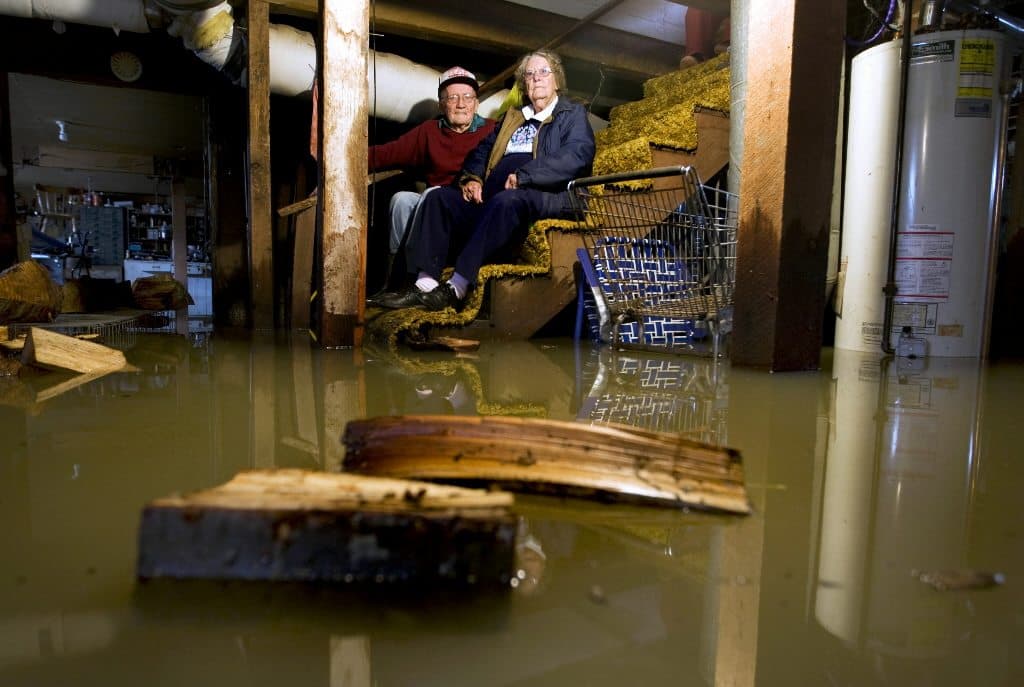
Every time it rains hard, groundwater from around thousands of foundations pours into a sewer system sized for waste, not stormwater. The system surcharges. When it surcharges, the pressure has to go somewhere — and it goes back up the laterals into the lowest fixtures it can find, which are the floor drains and toilets in basements.
Your neighbour's weeping tile can flood your basement. That is why this is a municipal priority rather than a private one.
What the disconnection actually involves
- A camera inspection confirms the weeping tile really is tied into the sanitary lateral
- A licensed plumber cuts that connection and caps it
- A sump pit is cut into the basement floor, and the weeping tile is redirected into it
- A sump pump discharges the collected water to the ground surface, well clear of the foundation
- The work is inspected under permit
Why it is worth doing even without the money
Disconnection removes the route that causes most sewage backups in older neighbourhoods. Sewage backup is the worst kind of basement flood — it is a biohazard, insurance often limits or excludes it, and remediation costs multiples of what prevention does.
Who pays for it
Effectively everyone. Halton Region covers 100% of materials and labour up to $6,500. Niagara Falls covers up to $4,000 for the disconnection and pump together. St. Catharines reimburses 90% up to $5,000. Mississauga funds the equivalent drain capping and sump work up to $7,500.
If your weeping tile is still on the sewer, you are close to the top of the list for funding wherever you live.
Want it checked properly? Book a consultation call: 647 206 3327
Need a plumber in the GTA?
Licensed & insured · Upfront pricing · Same-day service available 24/7
647 206 3327 — Call Now